The studies tested blood, not better days
CJC-1295 studies found hormone rises in small groups
Less soreness might mean more to you than a blood-test number. The early studies checked hormone changes; those results can't establish that daily aches improved.
The brief answer is that small human studies found hormone rises
A tired afternoon doesn't mean growth hormone is low. The early CJC-1295 studies tested small groups of healthy adults.
Single shots beneath skin contained 30 or 60 micrograms per kilogram. Body weight set the amount; micrograms weigh millionths of one gram.
Growth hormone rose 2- to 10-fold, ranging from double the starting amount to ten times that amount. One shot's raised hormone readings lasted at least six days.
A protein produced by the liver helps body tissues grow; its rise lasted nine days to eleven days [1]. Repeated shots kept the protein raised up to 28 days.
Researchers also measured how slowly CJC-1295 left the blood [1]. The timing didn't establish that you would feel better.
Another study tested healthy men aged 20 to 40, rather than older patients. Body weight set the single-shot amounts of 60 or 90 micrograms per kilogram.
Between the usual bursts, growth hormone readings were higher when checked a week later. The overall growth hormone average rose about 46%; the protein from the liver rose about 45% [3].
The bursts themselves hadn't changed in strength or how often they occurred [3]. These findings came from a separate paper, which reported different measures of hormone changes.
A later study tested blood from only eleven healthy young men [5]. Other proteins in their blood changed in amount alongside the rise in the protein made afterward.
The researchers proposed testing those other blood proteins to detect growth hormone changes. The finding concerned tests for research, without establishing a health gain or a test you need.
A raised hormone reading does not prove a healthier life
The human evidence comes from small studies of healthy volunteers. CJC-1295 raised growth hormone and the protein made afterward in those studies [1][3].
A fair CJC-1295 review gives those blood-test findings their due. You still need separate studies to know whether strength or sleep improves.
The stopped human program left lasting safety untested
Teichman 2006 and Ionescu and Frohman 2006 were early blood-test studies. ConjuChem's early human program, called Phase 2, stopped without progressing [1].
The participants had HIV, a virus harming the immune system, and deep belly fat. That stopped study didn't establish an approved treatment or lasting safety.
Large studies have yet to establish muscle gain, fat loss, or a slower rate of aging. Long use in healthy adults also lacks a proper safety study.
The hormone rise is supported, but the advertised health gains remain unproved. A sales page can make you think one finding proves both.

Rats and mice showed longer action, not a treatment for people
The first tests involved rats, so the results can't settle your treatment choices. Four changes and an added attachment were tested in copies of the natural hormone.
CJC-1295 was the attached copy chosen for more study [2]. A blood protein held that attachment, giving the copy a longer stay.
The two-hour growth hormone readings were 4-fold higher: four times the amount with the unattached copy. The rats being compared received the copy without DAC.
Researchers still detected CJC-1295 in blood beyond 72 hours [2]. Tests in a dish also found that the copy resisted breakdown better.
The mice tested next couldn't make the natural hormone needed to start growth hormone release. Researchers gave 2 micrograms every 24 hours, restoring normal weight and length [4].
Micrograms measure weight as millionths of one gram, so the amounts were tiny. The mouse result doesn't establish a shot plan for you.
Growth improved less when the gaps grew from 48 to 72 hours. The mice's gland also became more active in making growth hormone.
These animal findings support the attached copy's lasting effect on growth hormone [2][4]. Animal growth doesn't establish what a shot would do for a person.
A GHRH analog is a made copy of a hormone
The hormone studies explain a body's response, rather than relief for your symptoms. CJC-1295 increases the release of growth hormone already made in the gland.
The copied message starts growth hormone release
GHRH names the natural hormone giving that message; analog means a made copy. Sermorelin, tesamorelin, and CJC-1295 are made copies of that natural message [3].
The liver responds to extra growth hormone by making more of a protein involved in tissue growth. The CJC-1295 blood tests measured that protein, without proving better rest.
A 2024/2025 Nature Reviews Endocrinology review covered the natural hormone and its copies [13]. The review explained how the copies work and why longer action was sought.
Tesamorelin gained FDA approval for treating people with HIV who had excess belly fat [1]. CJC-1295 has no approved use; a related medicine's approval doesn't transfer.
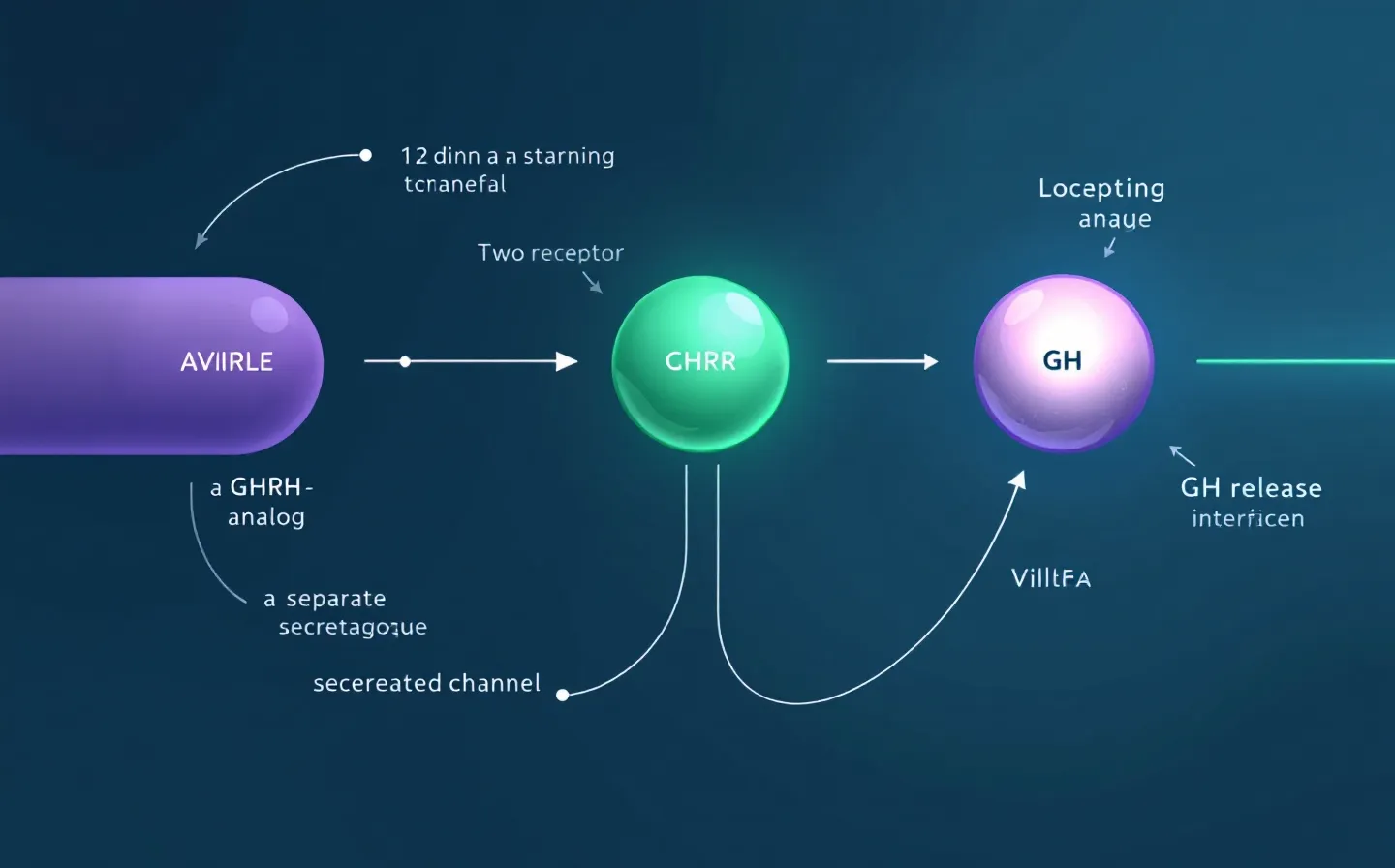
CJC-1295 and ipamorelin have no proved lasting health gains as a pair
The proposed pairing rests on brief hormone changes, not lasting health gains. CJC-1295 acts differently from ipamorelin, another peptide whose action increases growth hormone release from the gland [11].
Ipamorelin gives the gland another prompt to release growth hormone [11]. Research on these two kinds of peptide found a larger rise together.
CJC-1295 and ipamorelin claims about muscle and fat remain unproved
A larger short-term hormone rise is the finding behind pairing these kinds of peptide. Studies haven't established lasting muscle gains or fat loss in healthy adults.
CJC-1295 ipamorelin means two different prompts to the same gland
CJC-1295 copies a natural hormone's message, while the added peptide gives another prompt. The extra prompt can increase the hormone rise, but the rise doesn't prove a health gain.
CJC-1295 / ipamorelin has no dose proved for people
No comparison study in people has established an amount for this pairing. In a comparison study, researchers compare groups given different treatments or no active drug.
The fixed amounts online come from people experimenting outside such studies. These aren't amounts established by researchers watching and comparing groups of patients.
Brief extra hormone release explains why the pairing attracts attention. For you, the missing findings are a tested personal plan and lasting safety.